How to Make a Time-Lapse Video from Photos on Mac?

Creating a time-lapse video from hundreds or thousands of photos can produce stunning results, but assembling the images is only part of the process. You may also need to crop and edit your photos, correct changes in exposure, remove flicker, choose the right frame rate, and encode the final video.
In this guide, we'll show you how to create a time-lapse video from photos on Mac using GlueMotion, including how to process RAW images, reduce flicker, preview your time-lapse, and export the final video in resolutions up to 8K.
What Do You Need to Create a Time-Lapse from Photos?
A time-lapse video is created by displaying a sequence of photographs one after another as video frames.
For example, if you have 900 photos and create a video at 30 frames per second, your final time-lapse will last:
900 ÷ 30 = 30 seconds
The challenge is that a large photo sequence can contain differences in exposure, orientation, framing, or color. Processing hundreds or thousands of images manually can quickly become impractical.
GlueMotion is a time-lapse application for Mac designed to handle the entire workflow: importing and sorting photos, batch editing, color adjustments, deflickering, previewing, and video encoding.
Step 1: Import Your Time-Lapse Photos
Open GlueMotion and click the + button to select the folder containing your photo sequence.
You can also filter the files by prefix or suffix when your folder contains images that you don't want to include in the final time-lapse.
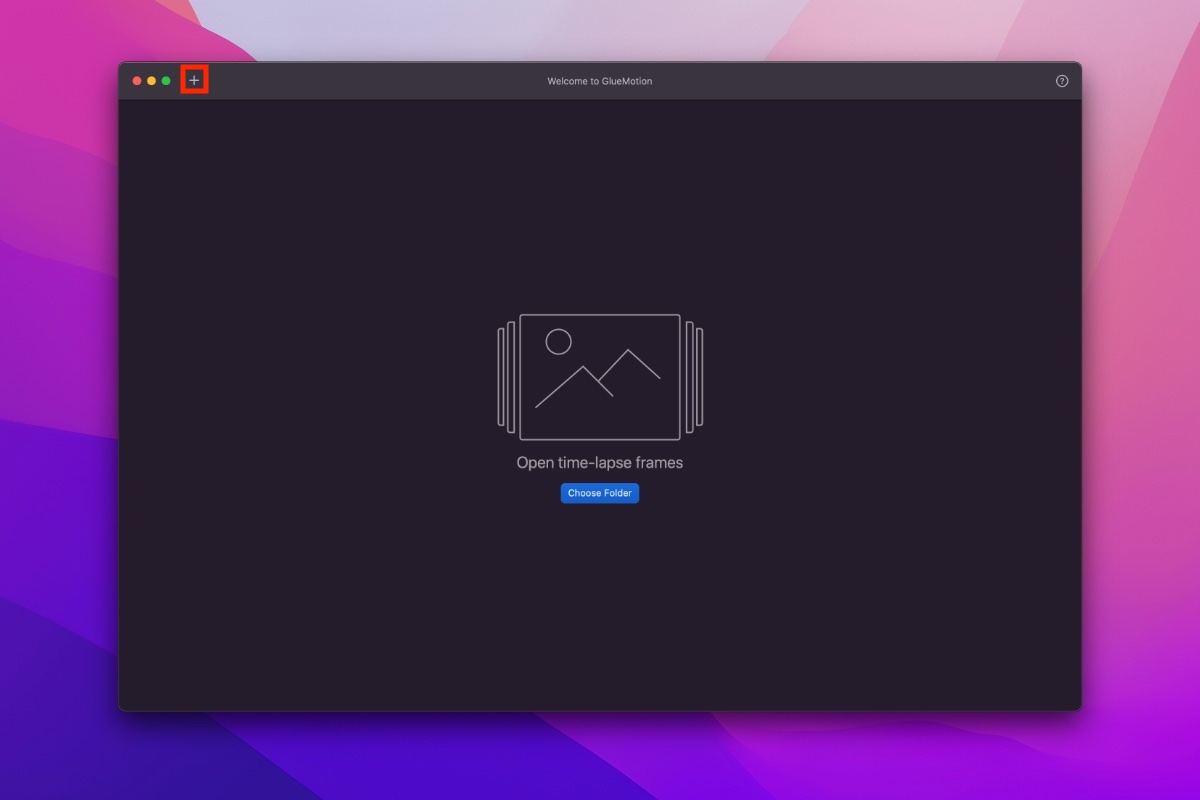
Once imported, your photos appear in the main window.
Make sure the images are in the correct order before continuing. GlueMotion provides sorting options directly from the toolbar.

When your photo sequence is ready, click Continue.
Step 2: Batch Crop and Rotate Your Photos
Consistency is important when creating a time-lapse. Instead of editing hundreds of photos individually, GlueMotion lets you apply transformations to the entire sequence at once.
You can:
- Crop your photos
- Rotate them
- Flip them
- Apply transformations consistently across the sequence
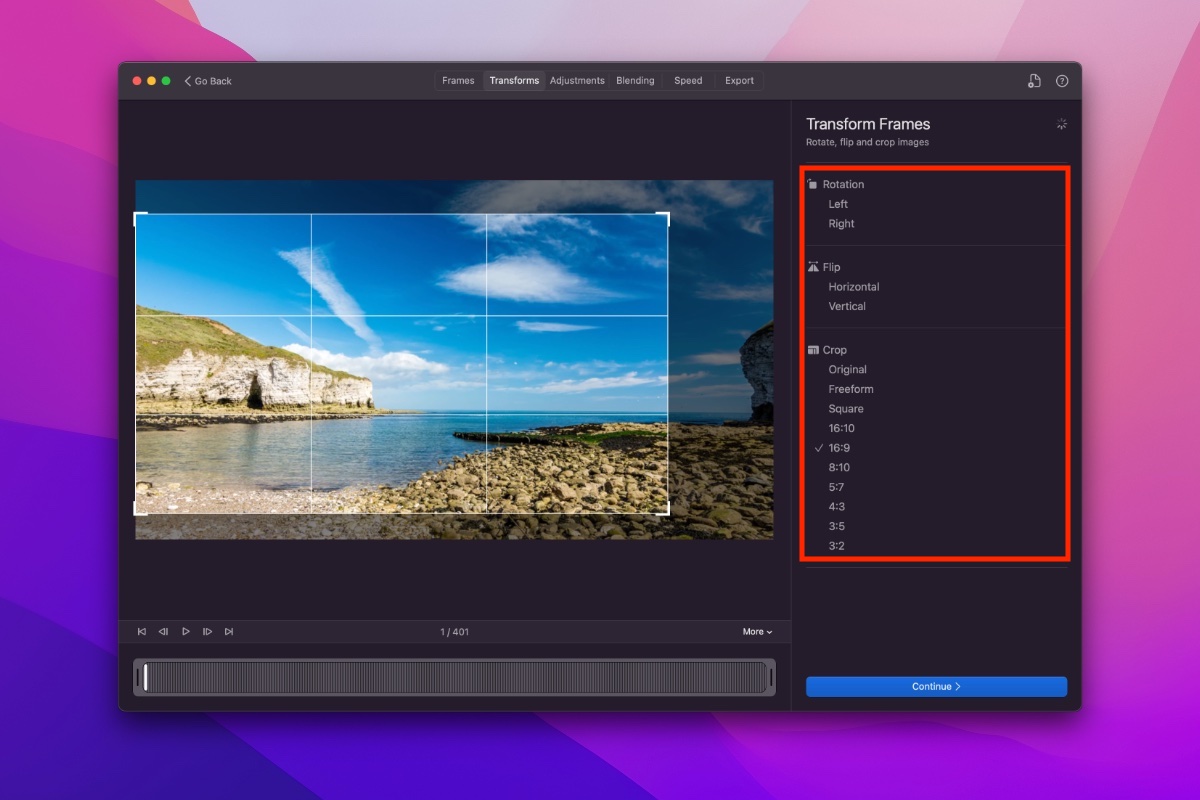
This is particularly useful when creating a time-lapse from a large sequence of RAW or high-resolution images.
Step 3: Adjust Colors Across Your Time-Lapse
Lighting conditions can change significantly during a long time-lapse.
A sunset, for example, may begin in bright daylight and end in much darker conditions.
GlueMotion provides keyframed image adjustments, allowing settings to change progressively throughout the sequence instead of applying exactly the same correction to every image.
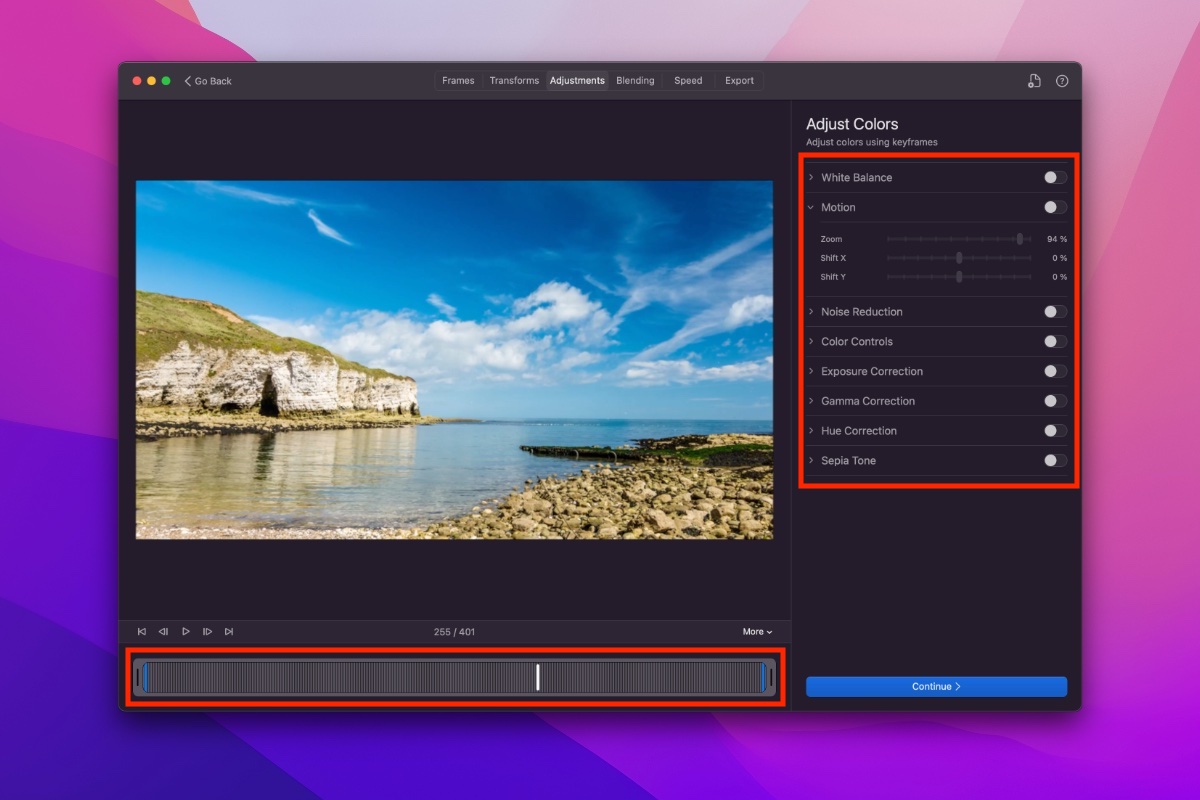
You can define adjustments at different points in the sequence, and GlueMotion creates smooth transitions between them.
Step 4: Remove Flicker from Your Time-Lapse
Flicker is one of the most common problems when creating a time-lapse from photographs.
Small exposure differences between consecutive photos can become highly visible once the images are played rapidly as a video. The result is an unwanted flashing or pulsing effect.
GlueMotion includes a deflickering tool that analyzes the brightness of your photo sequence and helps smooth these variations.
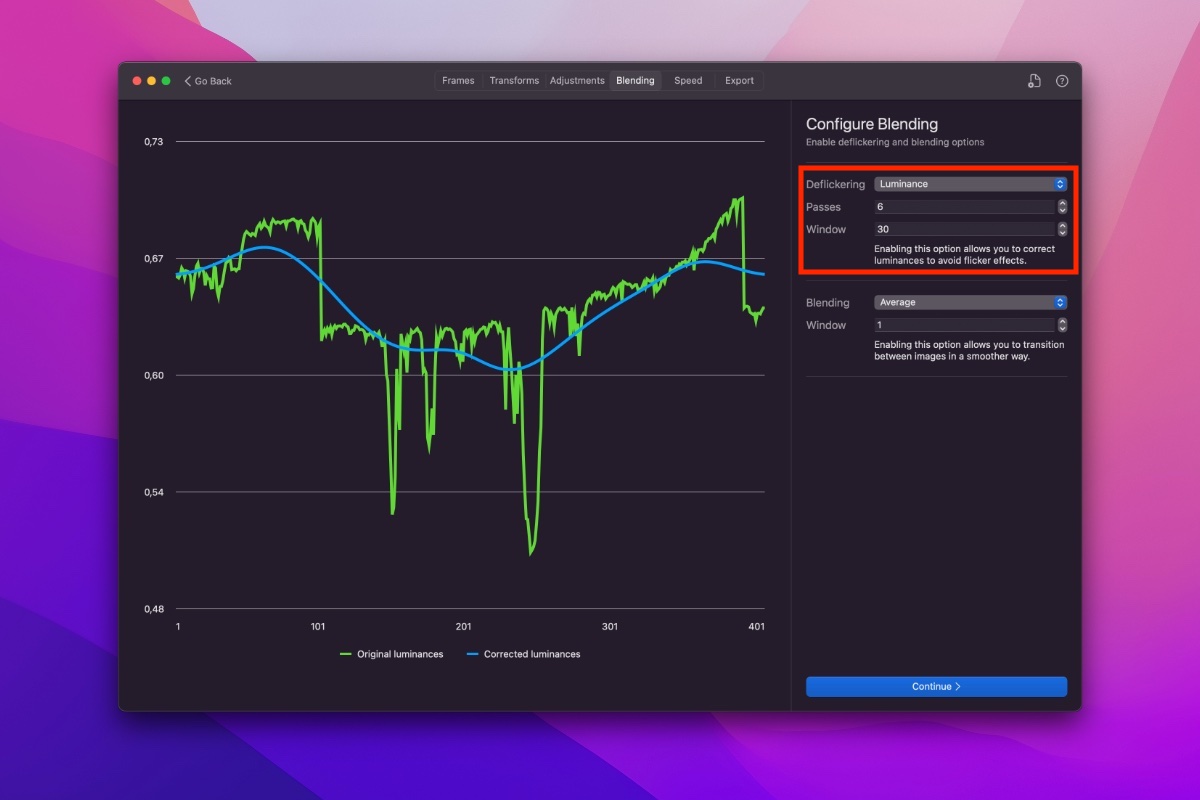
This allows you to create a smoother time-lapse without manually correcting the exposure of hundreds of individual images.
Step 5: Choose the Best Frame Rate for Your Time-Lapse
Frame rate determines both how smoothly your time-lapse plays and how long the final video will be.
GlueMotion lets you preview your sequence at different frame rates before encoding the final movie.
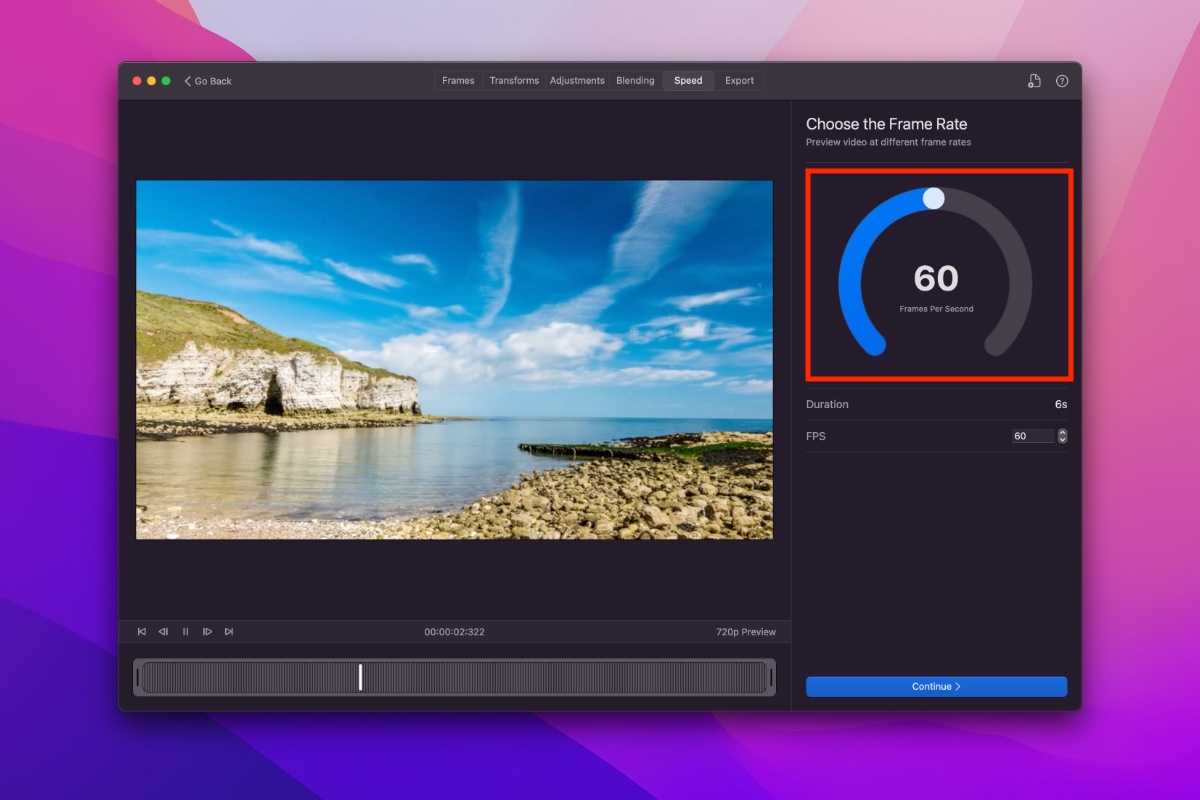
For example:
- 600 photos at 24 fps = 25 seconds
- 600 photos at 30 fps = 20 seconds
- 600 photos at 60 fps = 10 seconds
This makes it easy to experiment with the speed of your time-lapse before spending time exporting the final video.
Step 6: Export Your Time-Lapse Video
Once you're happy with the preview, you can configure the final video.
Choose the filename and destination, then select your preferred video format, codec, and resolution.
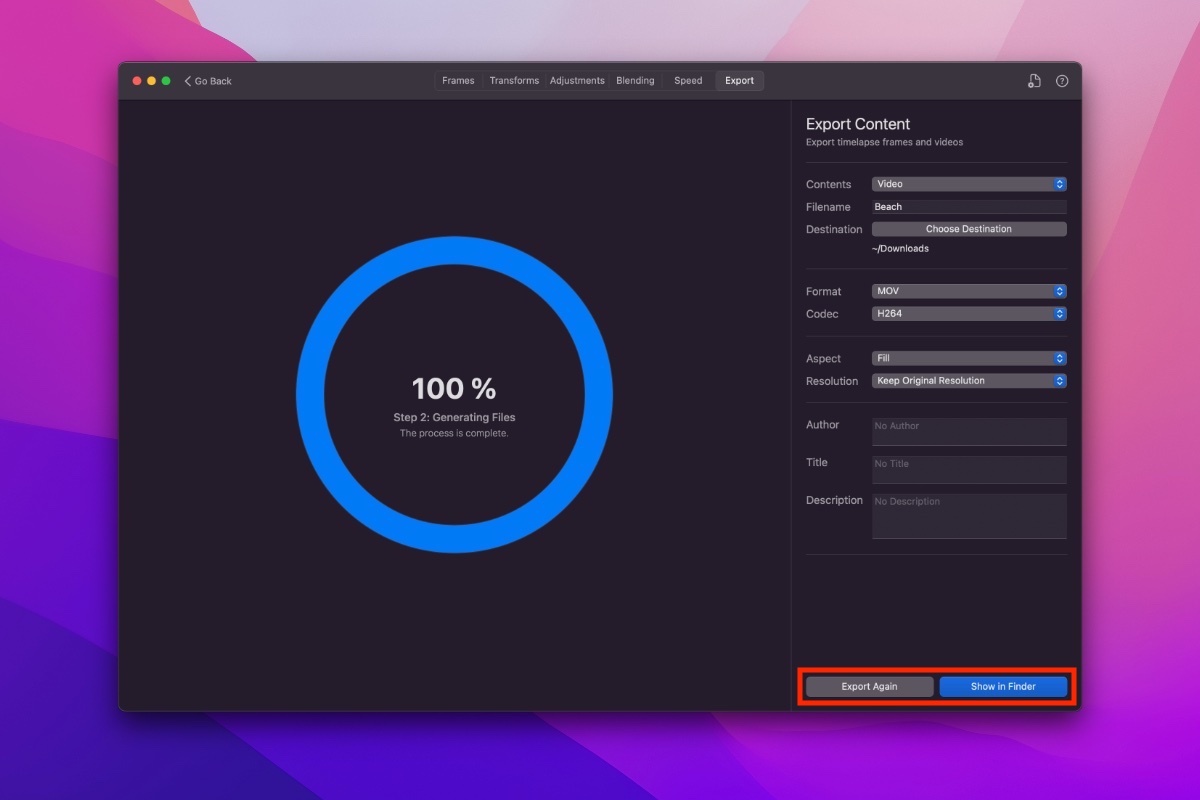
Depending on your workflow, GlueMotion can export using formats and codecs including:
- MP4, MOV and M4V
- H.264
- HEVC
- Apple ProRes
High-resolution photo sequences can also be used to create 4K, 6K, or 8K time-lapse videos.
Create a Time-Lapse from RAW Photos on Mac
Using RAW photographs for a time-lapse gives you access to the image quality and resolution captured by your camera.
GlueMotion is designed to process large photo sequences, making it possible to build a time-lapse directly from high-resolution images without first turning every photograph into an individual video frame manually.
This workflow is particularly useful for sunsets, landscapes, construction projects, astrophotography, cityscapes, plants, and other long-duration subjects.
Time-Lapse Example
Here is an example of a time-lapse created from a photo sequence with GlueMotion:
Download GlueMotion for Mac
GlueMotion brings the main steps of a photo time-lapse workflow together in a single Mac application: image sequence management, batch editing, color adjustments, deflickering, previewing, and video encoding.
Whether you're creating a simple time-lapse from a few hundred JPEG images or processing thousands of high-resolution RAW photos, GlueMotion is designed to simplify the workflow.
You can try GlueMotion from the NeededApps website or download it from the Mac App Store.
Stay in touch
We are working on awesome new projects, subscribe to be notified.